
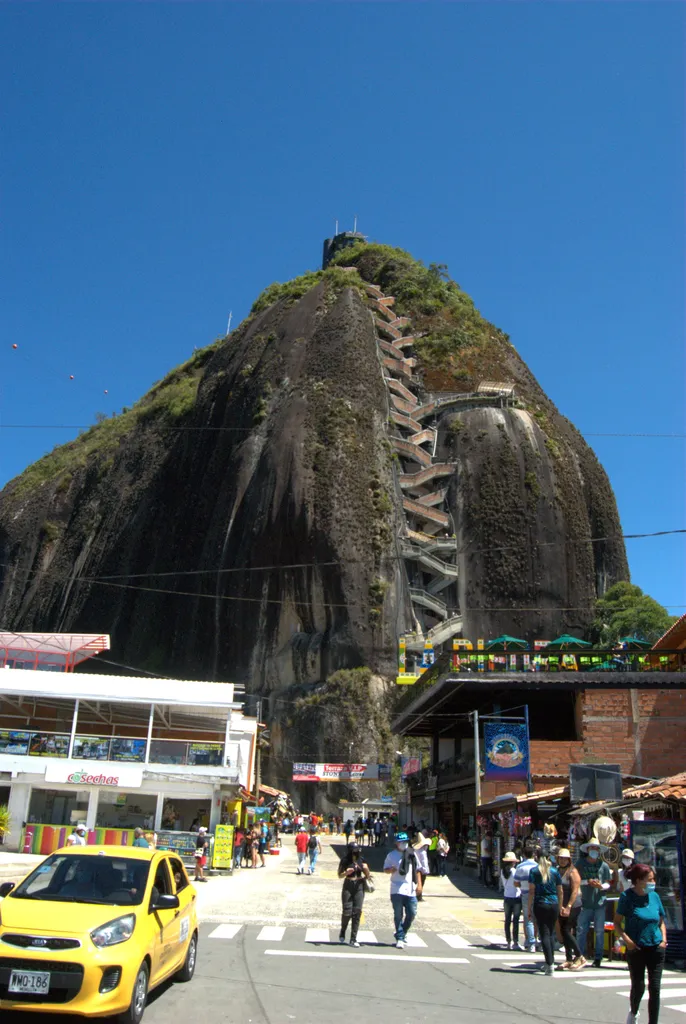
A Guatapé day trip from Medellín means climbing El Peñón de Guatapé’s 740-step staircase, walking the painted streets of Guatapé town, and getting back to Medellín the same night. The travel time each way runs 1h45–2h30 depending on traffic, but the day itself, door to door, typically takes 10 to 12.5 hours, which is longer than most people expect when they’re planning around “two hours away.”
How Long Does It Take to Get From Medellín to Guatapé?
The public bus from Terminal del Norte takes 1h30–2h to El Peñol, while Google Maps estimates 2h30 by car for the same route. That gap comes down to the route taken and traffic through Marinilla, a stretch that bottlenecks hard on weekend afternoons and holidays.
This is close to the number most blogs quote, and it’s the number Google’s own AI Overview surfaces for this search: “roughly two hours each way.” That holds up as a fair average. What it doesn’t capture is the spread: a weekday bus can beat two hours, while a Sunday return can run well past two and a half once Marinilla traffic backs up. That’s one of the most consistent complaints in traveler forums about this route.
The route runs east from Medellín, through the Autopista Medellín–Bogotá, with a turnoff toward Marinilla and El Peñol before reaching Guatapé. Google Maps puts the driving distance at 80 km, estimating 2h30 for the trip, longer than what the public bus typically takes on the same corridor. A private car, especially with a driver who knows the back roads through the area, usually beats both of those numbers.
Terminal del Norte gets busy on weekends. Saturdays are full of people heading out on trips, and Sundays bring the return crowd, everyone getting back before the work week starts. Go on a weekday instead and it’s a different experience: calmer, faster, and you’re not fighting a line just to buy your ticket.
How Long Does the Whole Day Actually Take?
A Guatapé day trip from Medellín takes 10 to 12.5 hours door to door, not the “two hours” figure most articles lead with, which only covers one-way travel time.
That gap between the travel-time figure everyone quotes and the actual length of the day is the single most common surprise for first-time visitors. Organized tours currently sold for this route list durations of 10 to 12.5 hours, which matches what a self-guided version of the same day looks like once you add the climb, the town, and the boat.
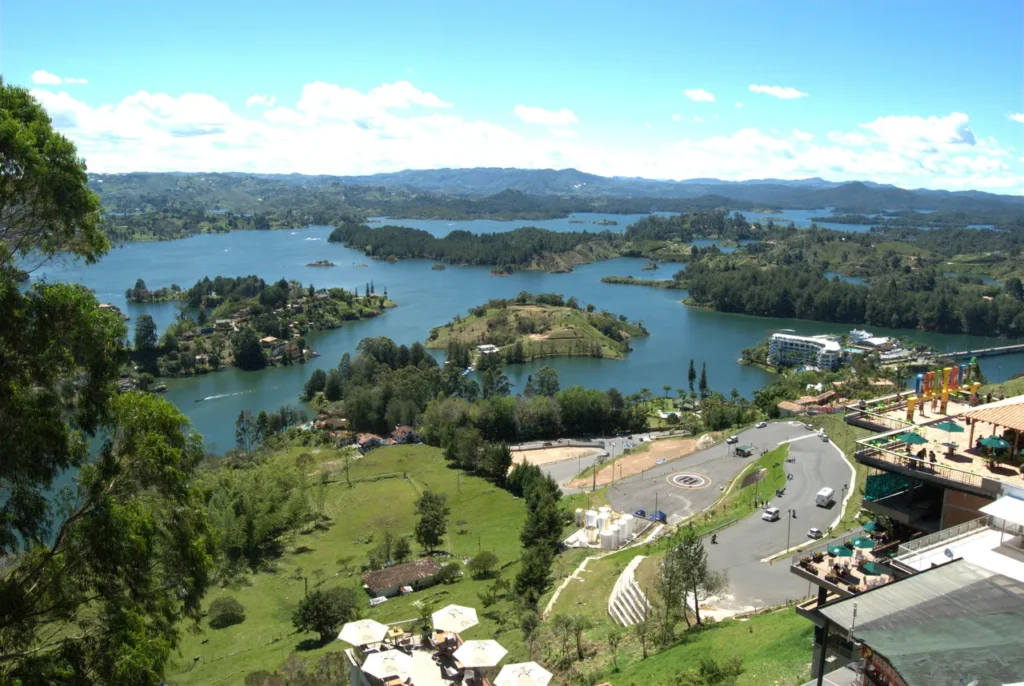
Here’s what that day actually looks like if you’re doing it yourself. You leave Medellín around 7 or 7:30 in the morning, either from Terminal del Norte or with a private driver, and you’re pulling into the Guatapé area by 9 or so. The climb up El Peñón and the time taking in the view from the top eats up until around 11. Budget close to an hour and a half for that, especially if there’s a line. Coming back down, lunch either at the base of the rock or once you’re in town carries you to around noon. The early afternoon, from noon to about 2:30, is for the town itself: the zócalos, Calle del Recuerdo, the main square. A reservoir boat tour takes another hour after that, and whatever’s left over is free time to wander or shop before heading back. Aim to leave Guatapé by 4 or 4:30 in the afternoon, which puts you back in Medellín somewhere between 6 and 7 PM.
Build in slack on either end. A departure later than 8 AM pushes the whole schedule back and increases the odds of hitting return traffic through Marinilla.
How Much Does a Guatapé Day Trip Cost in 2026?
A Guatapé day trip from Medellín costs roughly $30–90 USD per person for a shared group tour with meals included, or considerably less if you go by public bus and pay for the rock entrance and boat separately.
The number that catches almost everyone off guard: entrance to climb La Piedra del Peñol costs COP 35,000 per person as of January 1, 2026, and it is a flat rate, with no more seasonal variation between COP 20,000 and 30,000 like in prior years. This is also the piece most competing articles get wrong, since most of them were written before the price changed.
Most full-day tours bundle the round-trip transport, breakfast and lunch, and the reservoir boat ride into one price. What they almost never include is that COP 35,000 entrance fee. You pay it separately, in cash, at the ticket booth, which makes an advertised “$30 tour” closer to $35–40 once you’re actually standing at the base of the stairs. Almost no competing page states this plainly. Going the DIY route by bus, the fare from Terminal del Norte runs COP 25,000 one way if you’re headed into Guatapé itself, or COP 19,000 if La Piedra is your only stop. The El Peñol ticket gets you closer to the rock and costs a few thousand pesos less.
One detail worth knowing before you buy: Terminal del Norte sells two different one-way tickets, one to Guatapé and a cheaper one to El Peñol, which sits closer to La Piedra itself. Two ticket windows sell both routes at the same price, and both take cash only. Buses run about every 20 minutes, but on weekends they fill up fast enough that you may end up waiting for the next one.
Should You Take a Tour or Go by Bus?
A guided tour costs more but takes the logistics off your hands. You show up, get in the van, and the schedule is already set. Figure $30 to $90 USD per person, all-inclusive, for a day that runs 10 to 12.5 hours with a fixed itinerary and not much room to skip something or linger longer wherever you like. The trade-off works in your favor if anything goes wrong: that becomes the tour company’s problem to solve, not yours.
Going by public bus flips that equation. You’re looking at COP 19,000 to 25,000 one way, plus the COP 35,000 entrance fee and whatever you spend on food and the boat, cheaper overall, and the day length ends up close to the same 10 to 12 hours either way. What changes is who’s managing it. The upside is real flexibility: skip what doesn’t interest you, stay longer where you want, move at your own pace. The downside, covered in the next section, is that recovering from a mistake, like missing the last bus, is entirely on you.
I know Medellín well, so I’d take the bus myself. It’s cheap and simple once you know which window to go to. But if this is your first time in the city, I’d genuinely go with a tour, or at least with someone who knows the area. Finding the terminal, figuring out which ticket to buy, working out the return. All of that marks you as a tourist, and that’s exactly when someone might charge you more than the real price.
Which Guatapé Tour Is Worth Booking?
Most of what’s sold under “Guatapé tour” falls into a few categories. The standard option is a shared group tour with breakfast, lunch, and a boat ride included. It’s the most common, the easiest to find, and the right call for most first-timers and anyone watching their budget. A private tour gets you your own vehicle, your own pace, and flexible pickup, which matters more if you’re traveling with family or short on time. On top of the standard day, a handful of
operators sell add-ons: a faster, more scenic luxury speedboat crossing for anyone chasing better photos, or a paragliding and river tubing combo for travelers who want more adrenaline built into the day.
Entrance to La Piedra del Peñol is rarely included in any of these. Confirm before booking, not after.
How Many Steps Does El Peñón de Guatapé Really Have?
El Peñón de Guatapé (also called La Piedra del Peñol) has 740 steps to the top viewing platform, but you’ll see it listed anywhere from 649 to 750 depending on where the count starts.
The discrepancy has a simple explanation almost no page bothers to give: 649 steps take you up the outside of the rock to the base of the viewing tower; roughly 91 more steps inside the tower itself get you to the highest platform. Add them together and you get 740. Some sources count only the outdoor staircase, some count only the internal stairs, and some round differently, which is why the same tour operator can list two different numbers on two different pages.
![View down from the staircase of El Peñón de Guatapé toward the base restaurant area]](https://antioquiatravelguide.com/wp-content/uploads/2026/08/guatape-antioquia-08-1024x686.webp)
How Hard Is the Climb?
A steady climb without stopping takes 15–30 minutes; on a busy weekend, queuing at the narrower sections can push that closer to an hour.
The steps are steep in sections but have handrails and rest platforms throughout. Most people in reasonable fitness manage it without issue; those with knee or mobility concerns should plan for a slower pace and more breaks, not skip it outright.
What Is There to Do in Guatapé Besides the Rock?
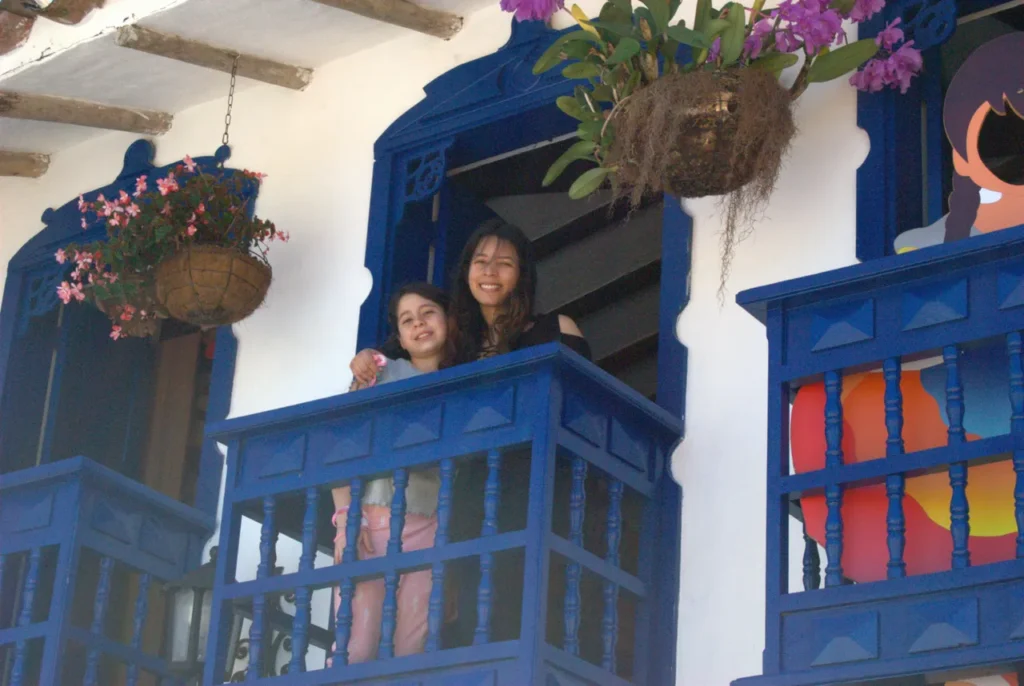
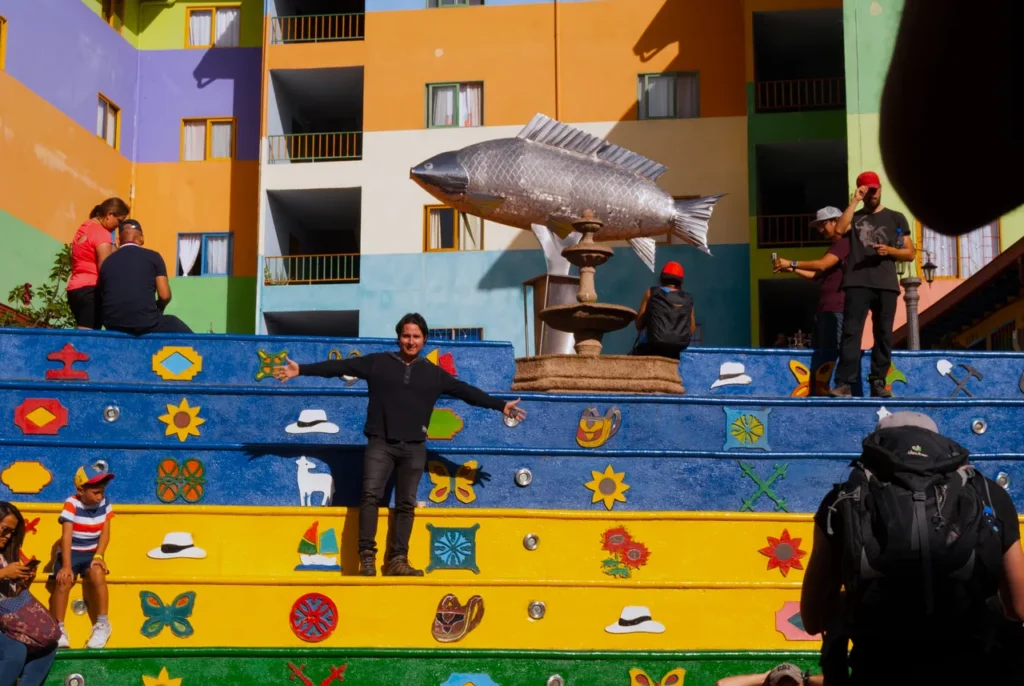
Beyond El Peñón, the town of Guatapé itself is built around the zócalos: carved and painted relief panels on the base of nearly every house, repainted periodically by the families who own them.
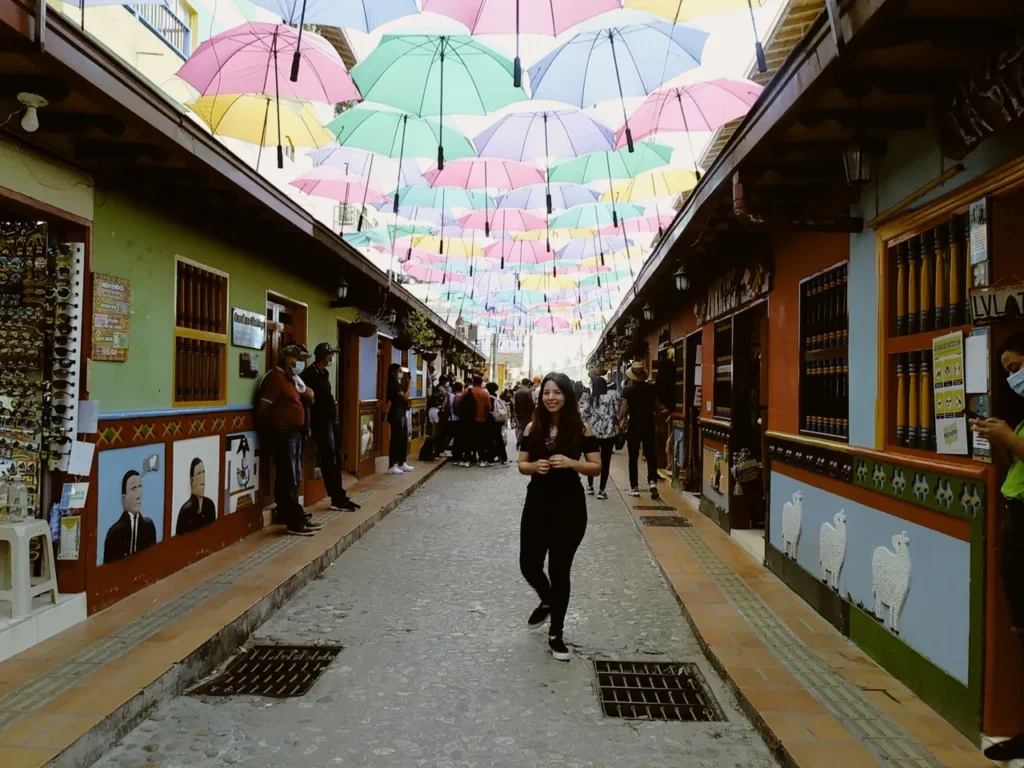
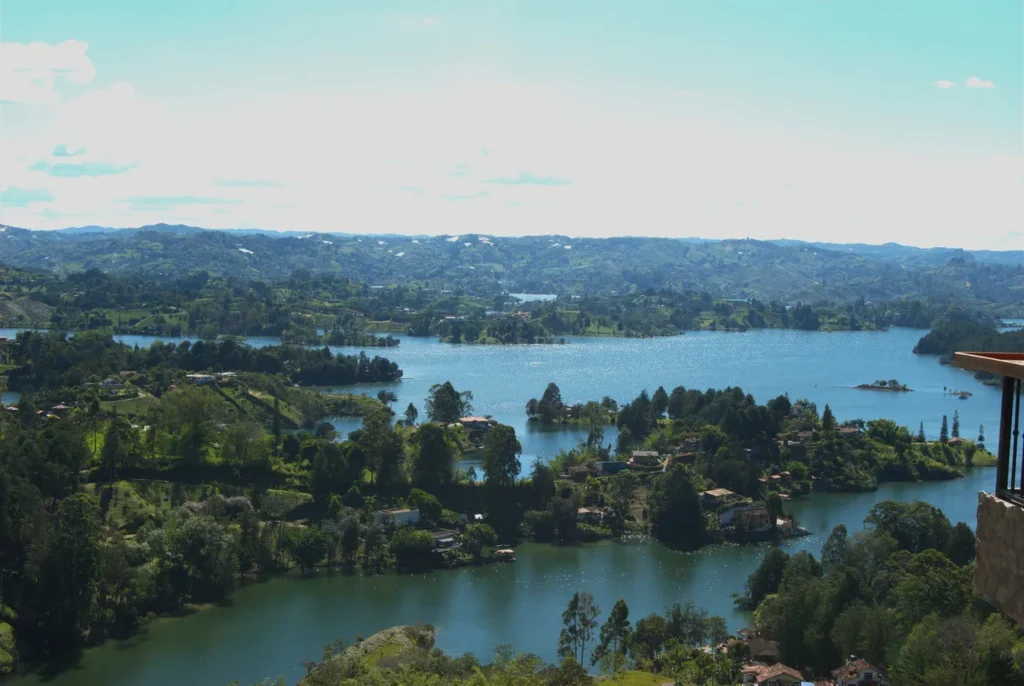
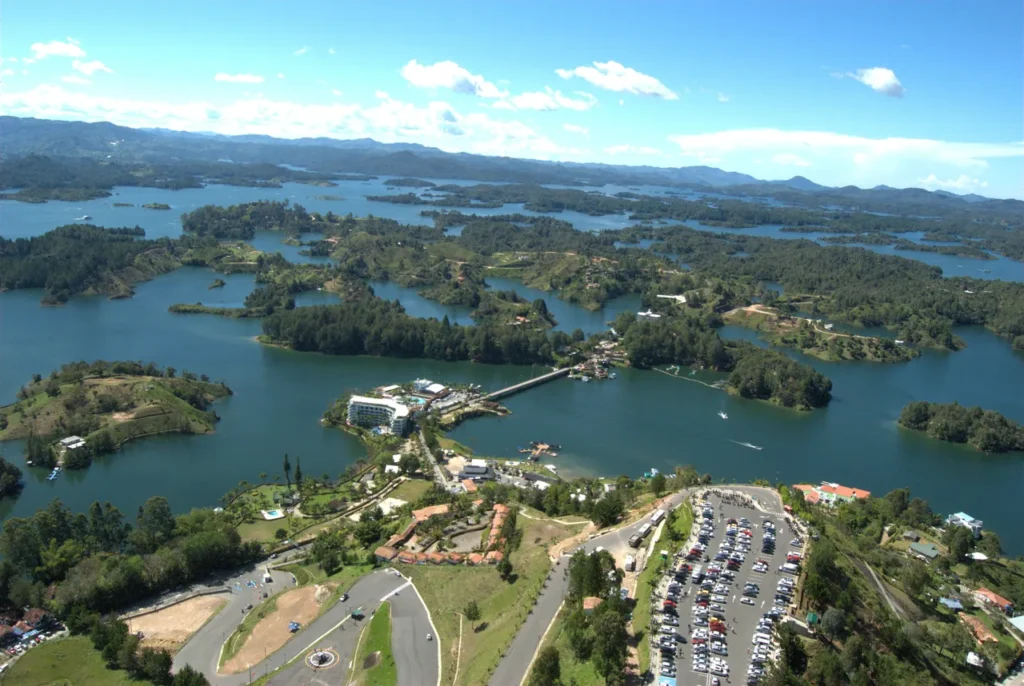
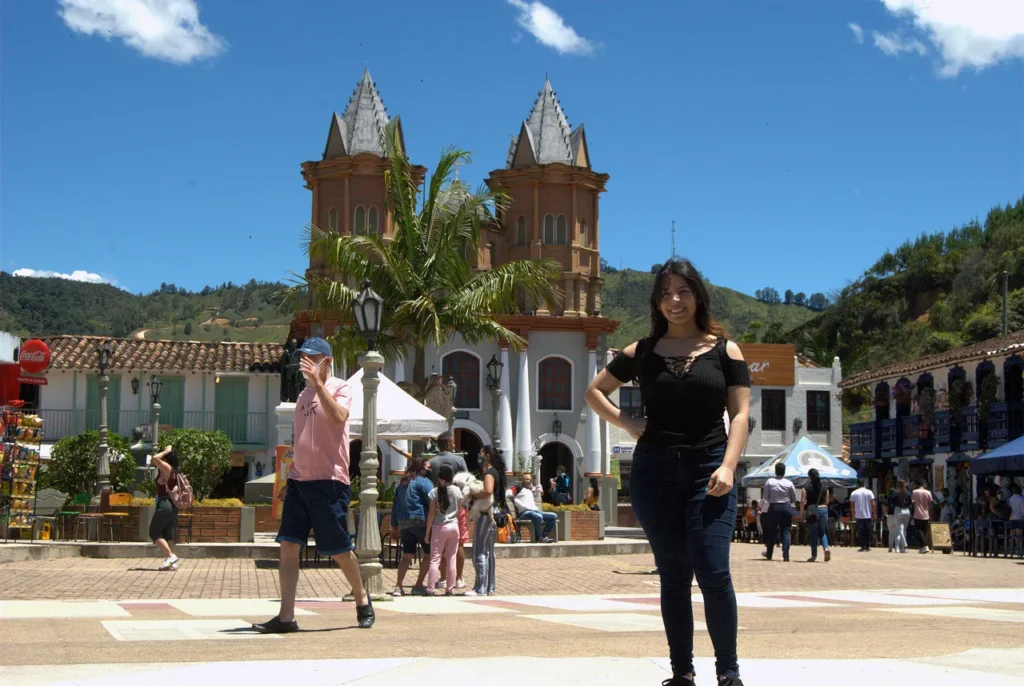
Calle del Recuerdo is the most photographed stretch, but the plaza and the waterfront malecón are worth the walk too. Reservoir boat tours run from the docks, passing several private islands and the visible, unfinished ruins of Hacienda Nápoles-era properties tied to the region’s past. Look for the incomplete letter “G” painted on one section of the rock, a detail locals will point out that most tourists miss entirely.
Weekday or Weekend: Does It Matter?
Weekdays are meaningfully less crowded than weekends, when Guatapé regularly draws over double its usual visitor volume; during Easter week 2025, the town saw around 300,000 visitors against an expected 250,000.
That volume translates directly into longer queues at the stairs, slower service in town, and heavier return traffic on the Medellín highway in the late afternoon. A Tuesday visit and a Saturday visit are close to two different trips.
What Happens If You Miss the Last Bus Back?
The last bus from Guatapé back to Medellín departs at 8 PM. Miss it, and your options are a private taxi or rideshare for the full return, or staying the night.
One detail that trips people up: the return ticket isn’t sold in Medellín. Terminal del Norte only sells the outbound trip. You buy your ticket back once you’re in Guatapé, so it’s worth doing that early in the day rather than leaving it for the evening rush.
Should You Stay Overnight Instead?
An overnight stay makes sense if you want to see Guatapé lit up at night, avoid the day-trip time crunch entirely, or combine it with nearby towns like El Peñol or Marinilla.
For a first visit focused only on the rock and the town, a day trip covers it. An overnight is worth the extra cost mainly for photographers, slower travelers, or anyone planning to also visit El Peñol town or the surrounding Oriente Antioqueño region.
Is Guatapé Safe for Tourists?
Guatapé is a low-crime, tourism-focused town, and the standard precautions that apply anywhere in Colombia (watch your belongings in crowds, use official transport, avoid isolated areas after dark) cover most of what a visitor needs to know.
The town’s economy depends heavily on tourism, which generally means a higher police and community presence around the main attractions than in less-visited parts of the department. That doesn’t mean zero risk; it means the profile is closer to any popular tourist town than to a high-crime area.
How long does the Guatapé day trip take from Medellín?
Travel time is 1h45–2h30 each way; the full day, door to door, typically runs 10–12.5 hours.
How much does it cost to visit Guatapé from Medellín?
Roughly $30–90 USD for a shared or private tour with meals, or less for the DIY bus route, plus the COP 35,000 entrance fee to La Piedra del Peñol, which most tour prices don’t include.
How many steps does La Piedra del Peñol have?
740 total: 649 up the outer staircase to the base of the viewing tower, plus roughly 91 more inside the tower to the top platform.
Is the entrance fee to La Piedra del Peñol included in tours?
Usually not. Confirm with the specific tour before booking. Most operators list it as a separate cost paid at the ticket booth.
Can I visit Guatapé without a tour?
Yes. Public buses run from Terminal del Norte in Medellín every 20 minutes, cost COP 19,000–25,000 one way depending on destination, and take cash only. The trade-off is less flexibility on timing and no one managing logistics if something changes.
Is Guatapé worth visiting as a day trip, or should I stay overnight?
A day trip covers the rock and the town comfortably for most visitors. An overnight makes more sense for photographers, slower travelers, or anyone combining it with nearby towns.